Potential Impact of Tariffs on the Construction Industry, and How to Mitigate Owners Risk
You can’t complete a headline scroll these days without seeing a story on tariffs and “trade wars.” Commodities central to the construction industry like steel, aluminum, lumber, and copper have all been subjects of new or potential tariffs in recent days. As a stakeholder in a construction project, here’s what you should know about this, how it could affect your bottom line, and what you can do about it.
Is this a product that is typically domestic or imported?
The obvious effect of a tariff is that it could make your construction project more expensive. The short-term consequences would be immediate higher material costs, which would work their way up from suppliers to subcontractors to GCs to owners. For example, if a given project were to be using Canadian lumber, and a 10% tariff were levied on lumber from Canada, your contractor will either: a.) still buy the Canadian lumber, and pass the increased material cost up the chain to the owner; or b.) buy domestic lumber, and pass the increased material costs up the chain to the owner.
The long medium-long term effects could be disruptions to the commodities markets for a given material itself. Going back to our lumber example, if your project was already using American lumber, there is likely no short-term effect on the project cost. However, the medium-long-term effect could vary – if there is increased demand for American lumber, theoretically, it could shrink supply and increase cost. On a macro level, tariffs do not happen in a vacuum. If the US levies a tariff on lumber, other countries are likely to levy tariffs on the American lumber (and other products) in turn. This could cause changes to supply and demand sides and alter commodity pricing in any direction. This is a bit more of an unknown, with multiple variables, and even If I could predict what would happen to commodity prices, I would be living in a much bigger house and certainly wouldn’t tell you in a free blog post!
What could be done to protect your interests and limit your costs – there are a few considerations here.
Consider “locking in” pricing, such that you, the owner, are not left “holding the bag” as the kids would say. For a project that is directly owner-funded, this will look different than a government-funded job. This could be accomplished through a contractual negotiation with your contractor to honor set pricing for a set period of time. One may also consider buying potentially affected products ahead of time. The upshot here is cost savings on your material – however, there are of course risks with this. Do you have the storage space to commit? Are you ready to pay for the stored material – once the product arrives on site, it is appropriate for your contractor to bill you for the material. Is there proper insurance in place in case the product gets delivered and is somehow damaged while in storage? The pros & cons will yield different decisions on a case-by-case basis.
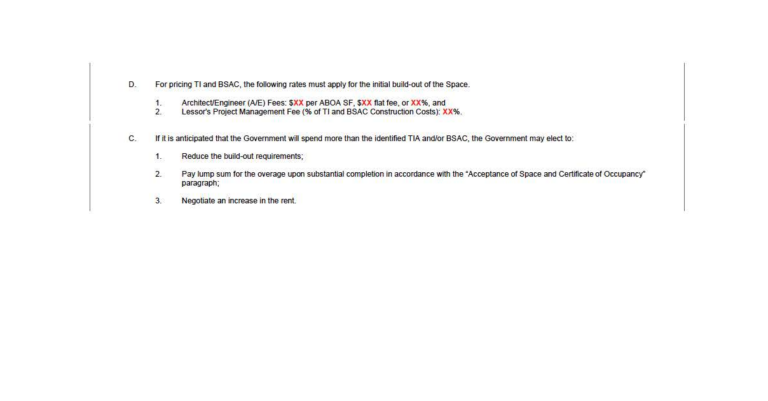
Many of our projects at JWBS are funded directly by federal agencies, like the GSA, VA, or Army Corps of Engineers – funding on these projects tends to be issued in one fell swoop, and negotiating change orders with the government can be notoriously time-prohibitive. If an owner were to come back to the federal government post-award with their hand out due to a tariff-related cost-increase, then that owner should prepare for a losing battle. Think before submitting a funding request to GSA – could a potential tariff have a major short-term impact on this cost? Qualify any funding requests you send with expiration dates to limit your risk. Have a frank conversation with your contacts from GSA about the risks of potential cost increases and discuss a plan. Have you submitted a proposal to GSA recently that you haven’t received an award for yet? Consider applying an expiration to it, or rescinding and reissuing if it could be majorly impacted financially by tariffs.
Consider also your project’s geography – areas along the northern border are more likely to have imports from Canada. For example, I’m working with one of the largest GC’s in the Detroit metropolitan area – from Downtown Detroit you can quite literally walk to Canada. The largest steel subcontractor in Detroit gets nearly all its product from a plant in Windsor, Canada, just across the bridge from Downtown. With 25% tariffs on Canadian steel likely to be announced soon, this would have had a direct effect on our project – luckily all our steel is already purchased and installed. On the subject of steel, it’s reported that roughly 25% of all steel used in the US is imported. Canada is also the largest foreign supplier of steel in the USA – followed by Brazil, and Mexico. Chinese steel in the US has been almost a non-factor since the 2018 tariffs were set (which have remained in place since 2018).
Bottom Line
Talk to your construction manager/owner’s representative about the potential impacts of tariffs on your individual projects and get ahead of it as much as possible to limit your exposure to potential cost increases. Each job could have wildly different impacts depending on timing, location, funding source, and scope of work.